
A Data-Driven Architecture
One of the core strengths of the Hytale engine lies in its NPC framework, which is entirely configurable via JSON files. This means modders won't need to write Java code to create complex behaviors; everything is handled through "Roles" and simplified instruction lists.
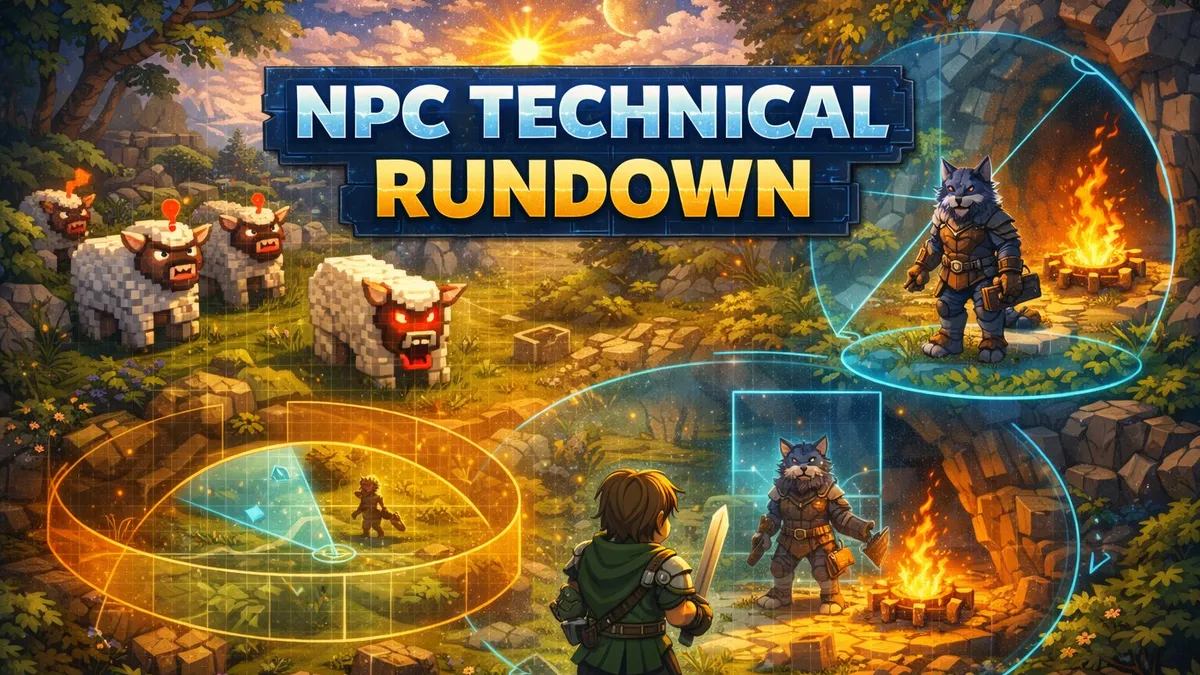
Every NPC is assigned a Role that dictates its reaction to world stimuli (movement, equipped items, appearance). By simply swapping a sheep's template from "Livestock" to "Predator," it can transform from a peaceful creature into an aggressive hunter.
The Combat Action Evaluator (CAE)
To prevent predictable combat encounters, Hytale utilizes the Combat Action Evaluator. This system allows NPCs to make real-time decisions based on context:
- State Analysis: The NPC evaluates its own health as well as its opponent's.
- Fuzzy Decision Making: Instead of simple attacks, an AI might choose to block, retreat, or summon minions if its health is low.
- Real-world Example: The Skeleton Praetorian can decide whether to charge the player or raise a shield based on distance and perceived threat level.
Pathfinding and Performance Challenges
The studio remains transparent about ongoing difficulties. Pathfinding in a fully destructible, procedural world is a significant technical hurdle:
- Voxel World: Unlike traditional games, Hytale cannot pre-calculate paths because the terrain is constantly changing.
- Current Limitations: To maintain performance, certain capabilities like jumping across gaps for predators are still restricted.
- Debugging Tools: New commands like
/npc debug set VisSensorRangesallow creators to visualize creature vision and hearing cones in real-time.
The Future: Moving Toward Visual Tools
Currently, NPC configuration is done manually within code files. However, the long-term goal is to provide visual editing tools and advanced debugging features to make NPC creation accessible to all content creators.